Reviewing the Caduceus Medical Symbol for Embroidery
As a designer who spends half my life digitizing and the other half stitching, I have learned that not all symbols translate well from screen to thread. Some designs look crisp in a vector preview but turn into a tangled mess of puckered fabric once the needle hits the hoop. When I first pulled up the Caduceus, Medical Caduceus Symbol for evaluation, my immediate concern was clarity. This is a symbol loaded with meaning, often associated with healthcare, medicine, and healing. It carries weight. For an embroidery project, that means the design cannot just be recognizable; it must feel professional and intentional.
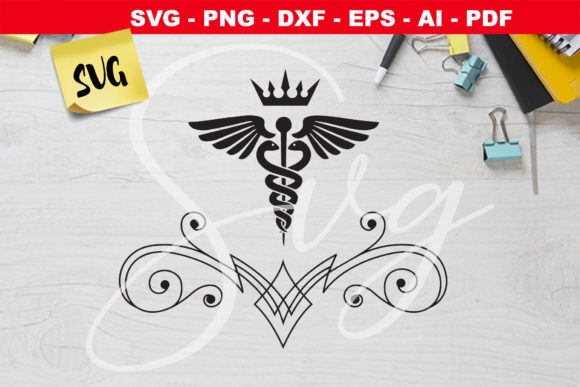
The first impression of this specific machine embroidery design is one of clean, classical balance. The dual snakes winding around the winged staff create a vertical symmetry that is naturally pleasing to the eye. In the context of Graphics and digital assets, symmetry is easy to achieve. In embroidery, however, symmetry requires precise tension control and smart stitch placement. Looking at the layout, the design avoids excessive micro-details that often plague complex symbolic imagery. This is a crucial observation for anyone planning to use this in a real-world craft business setting. If the lines are too thin, they vanish on textured fabrics. If they are too dense, the fabric warps.
Real-World Application: The Custom Tote Bag Test
To truly understand how this design performs, I mentally walked through a common scenario for many Etsy sellers and handmade shop owners: creating a customized tote bag for a nursing student or a medical professional. A tote bag is a practical, high-visibility item. It needs to withstand frequent washing and heavy loads. Placing the Caduceus, Medical Caduceus Symbol on a canvas tote requires careful consideration of scale.
If the design is too small, the intricate curves of the snakes and the details of the wings might merge into a single blob of thread. If it is too large, the stitch count could become prohibitive, making the bag stiff and uncomfortable to carry. Based on the visual structure of this file, it appears best suited for a medium-sized hoop, perhaps 5x7 or 6x10 inches, depending on the specific digitizing. The open spaces between the snakes and the staff allow the fabric texture to breathe, which is essential for maintaining the soft drape of a cotton or canvas bag. This balance suggests that the designer behind this file understands the limitations of thread.
Versatility Across Apparel and Home Decor
Beyond tote bags, this symbol has strong potential in custom apparel. Imagine it embroidered on the left chest of a scrub top or a polo shirt. In this application, professionalism is paramount. A messy stitch-out can undermine the wearer’s authority. The clean lines of this embroidery file suggest it would hold up well on smooth, stable fabrics like poly-cotton blends commonly used in medical uniforms. The vertical orientation fits naturally on a chest pocket area without looking cramped.
For home decor, such as a pillow cover or a kitchen towel, the design offers a touch of dignified elegance. A white tea towel with the Caduceus stitched in deep navy or slate gray thread creates a sophisticated, boutique look. It moves the item from a generic kitchen accessory to a thoughtful personalized gift for a doctor or nurse. However, when working with terry cloth or textured towels, I would advise using a cut-away stabilizer to prevent the design from sinking into the loops of the fabric. The visual appeal relies on the contrast between the thread and the background, so ensuring the stitches sit on top of the texture is key.
Navigating Fabric Challenges and Stitch Density
One of the most critical aspects of evaluating any digital embroidery file is understanding where it might fail. The Caduceus, Medical Caduceus Symbol features curved elements—the coiling snakes and the wings. Curves are notorious for causing puckering if the stitch density is too high. While I cannot verify the exact stitch count without loading the file into my software, the visual simplicity suggests a moderate density. This is generally a good sign.
However, caution is needed when stitching on stretchy fabrics like jersey knits for t-shirts or baby clothes. Without proper stabilization, the pull of the thread can distort the shape of the staff, making it look bent or uneven. For baby embroidery items, such as a onesie or a burp cloth, I would recommend testing the design on scrap fabric first. Ensure that the thread colors chosen provide enough contrast. A low-contrast combination, such as light gray on white, might cause the detailed wings to disappear, reducing the impact of the symbol.
Dark fabrics present another challenge. If you are stitching this onto a navy or black garment, you may need to adjust your underlay stitches or use a lighter top thread to ensure visibility. The design’s effectiveness relies on its silhouette. If the details get lost in shadow, the symbol loses its communicative power. Always test your finished product under different lighting conditions to ensure the design reads clearly.
Commercial Viability and Brand Consistency
For small shop products and commercial embroidery projects, consistency is everything. Customers expect the same quality every time they order. This design’s straightforward geometry makes it highly reproducible. Unlike complex photorealistic designs that can vary wildly based on machine tension, a symbolic design like this is more forgiving. This reliability is a major asset for an Etsy seller managing high volumes of orders.
Furthermore, the symbol itself carries inherent trust. Using it on merchandise signals care, healing, and professionalism. This enhances the perceived value of the handmade product. Whether it is part of a holiday gift set for healthcare workers or a branding element for a local clinic’s promotional items, the design supports a narrative of quality. It aligns well with brand consistency for businesses in the health and wellness sector.
Practical Designer Notes for Best Results
Before you commit to stitching this design on a final product, here are a few practical steps to ensure success. First, always check the file formats. You will receive this design in SVG, AI, PDF, EPS, DXF, and PNG formats. Please ensure that your software and machine accept these formats. This list is for an INSTANT DOWNLOAD DIGITAL product. Note that while SVG and DXF are common for cutting machines and some embroidery software, you may need to convert or import them carefully depending on your specific digitizing program. Always verify compatibility with your hardware.
- Test on Scrap Fabric: Never skip this step. Check for puckering and thread breaks.
- Check Thread Contrast: Ensure the design stands out against your chosen fabric color.
- Review Stabilizer Choice: Use cut-away for knits and tear-away for wovens, adjusting based on fabric weight.
- Inspect Small Details: Zoom in on the wings and snake heads to ensure they are not too fine for your needle size.
- Confirm Licensing: Before selling finished items, confirm the license terms included with the download.
In the realm of Crafts, having reliable design assets is half the battle. The Caduceus, Medical Caduceus Symbol offers a solid foundation for a variety of projects. It respects the mechanics of embroidery while delivering a powerful visual message. By paying attention to fabric choice, stabilization, and scale, you can transform this digital file into a standout embroidered patch, a cherished gift, or a best-selling item in your online store. The key is to treat the design with the respect it deserves, acknowledging both its aesthetic beauty and its technical demands.